One place, many visits
The sit spot
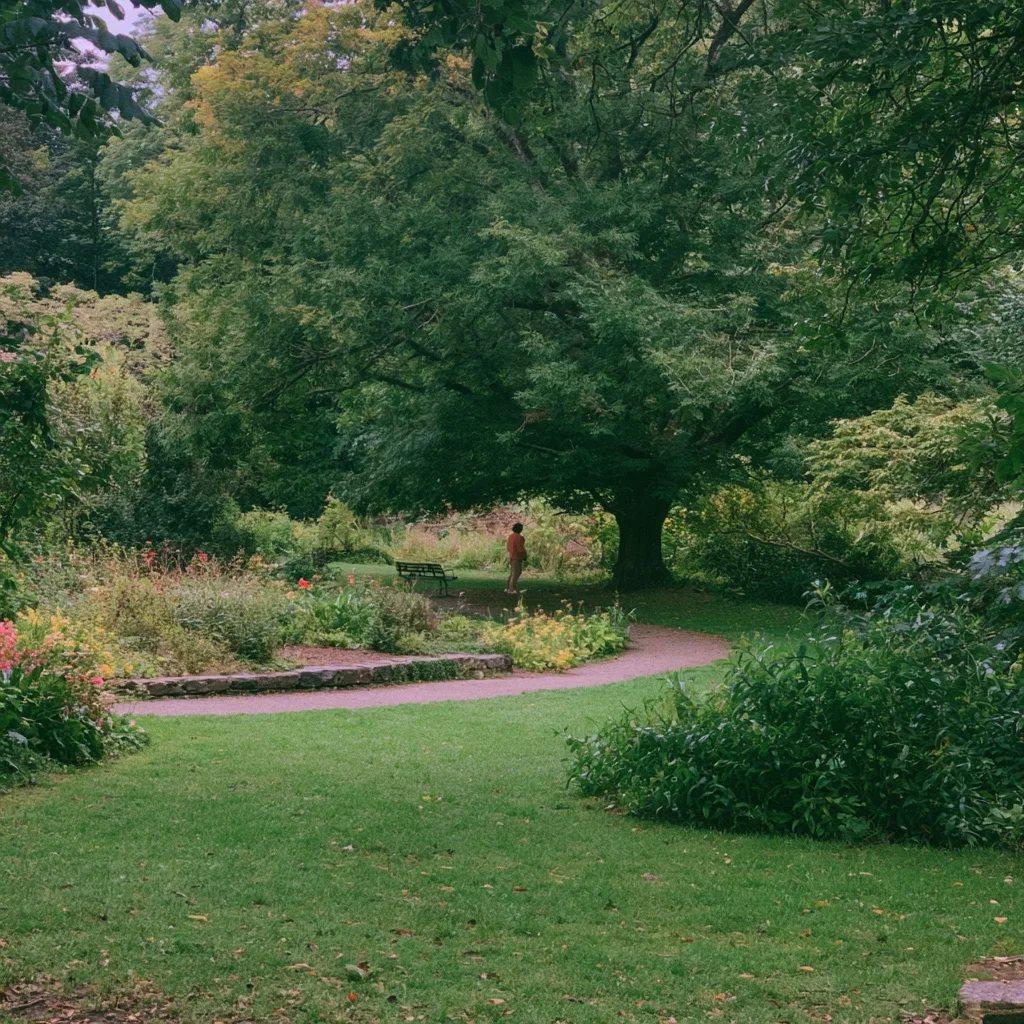
A sit spot is one place outdoors that you return to, again and again, to sit quietly and notice what has changed. It can be a bench, a back step or a patch of grass at the end of your street. The point is not the place. It is the return.
The name comes from the naturalist Jon Young, who teaches it as a way to get to know the life around you. You can begin today, in about fifteen minutes.
Sit down, and press play
These Rewyld recordings are made for staying in one place. Use one to settle on your first visit, then go without it.
At the end of the day
The day is nearly done. Wherever you are, stop for a moment and let your weight settle.
These recordings are short samples, under two minutes each. In the Rewyld app, you can take a guided walk for your place and today’s conditions.
Try a walk in the appRead the words of “At the end of the day”
The day is nearly done. Wherever you are, stop for a moment and let your weight settle.
Look at the light around you. Where is it brightest, and where is it softest?
Notice the air. Does it feel different from earlier today, or much the same?
Listen for a while. Which sounds belong to this part of the day where you are?
Find one living thing nearby, a tree, a plant, a bird, and give it a few quiet moments. If nothing living is in view, stay with the sky.
How are you feeling as the day winds down? You can let that be just as it is.
Stay as long as you like. When you're ready, carry this quiet into your evening.
Choose your spot
Pick somewhere close. Wilderness Awareness School, which teaches the practice, suggests a place less than a five-minute walk from your front door. A spot you can reach easily is one you will keep going back to.
- Somewhere you feel safe sitting alone and still.
- Something living in view: a tree, a hedge, a patch of weeds, a strip of sky.
- A seat you can return to exactly: the same step, the same end of the bench, the same rock.
If getting outside is hard, an open window can be your sit spot. Rewyld’s Nature at Your Window journey is built around returning to one view.
What to do there
- Arrive and settle. Sit down, or stand somewhere you can stay still. Let your breathing slow on its own. For the first few minutes, do nothing but arrive.
- Let the place settle around you. Stay quiet and still. Whatever was disturbed by your arrival has a chance to go back to what it was doing.
- Listen, then look. Start with sound: near, then far. Then let your eyes move slowly across the place, without fixing on anything.
- Notice one change. Ask what is different since the last time you sat here. The light, the sounds, the ground, what is growing, what has fallen.
- Write one line before you leave. Note the date, the time and the one change you noticed. Over weeks, these lines become a record of your place.
In What the Robin Knows, Young suggests going often, daily if possible, and staying long enough for the birds around you to return to their ordinary calls. You do not need to know their names to notice the difference.
How long, and how often
Wilderness Awareness School suggests anywhere from ten minutes to an hour. Start with ten or fifteen. Going back often matters more than staying long, because change shows up between visits.
Try different hours once you are used to it. The same spot at dawn, at midday and at dusk can feel like three different places.
Questions to bring with you
Take one each time. You do not need to answer it in words.
- Where is the light today, and where is the shade?
- What is the first sound you hear? What is the last?
- What has moved since last time? What has stayed?
- Is anything here newly growing, or newly gone?
- Who else uses this place? What signs have they left?
- How do you feel when you arrive, and when you leave?
Keep a log
One line a visit is enough. Over a season the lines show you what you would never see in a single sit: when the light moves, when a sound first appears, what came and went. This free log has room for twelve visits on one page.
If you would like your notes to count for science, two programmes ask volunteers for exactly this kind of return. In the United States, Nature’s Notebook from the USA National Phenology Network asks you to choose a location you can visit regularly and make weekly observations of its plants and animals. In the UK, the Woodland Trust’s Nature’s Calendar invites you to choose a mature tree, visit it regularly, ideally once a week, and record its seasonal changes.
What the research says
Not much yet, and it is worth being plain about that. The sit spot comes from naturalists and outdoor educators, not from a laboratory.
One study, published in 2026, asked university students in two courses to do a short sit spot practice repeatedly as part of their coursework. Measured before and after, the students reported feeling more connected to nature, better mood and more mindful attention. The results come from the same students before and after, at one university, so it is an early result.
A related line of research looks at noticing nature close to home. In a 2017 study, 50 adults wrote down three good things in nature each day for five days, while 42 others wrote down three factual things. The nature group’s sense of connection with nature rose more, and the authors report the rise was sustained. That study tested noticing and writing, not sitting in one place, but it is the same habit of attention.
What a sit spot gives you is simpler than any of that: a place you know well enough to see it change.
Keep going
- Outdoor mindfulnessPractices for noticing nature, from a bench or on the move.
- Autumn WalksA Rewyld journey about returning to a familiar place as it turns.
- A walking meditation scriptFive minutes to read, record or print, with variations.
- How to take an awe walkWhat the 2020 awe walk study did, and how to try one.
- How to take a mindful walkChoosing a route, what to notice, and a short guided walk.
- Walking meditation with RewyldGuided walks composed for your place and the day’s conditions.
Sources
- Young, J. (2012). What the Robin Knows: How Birds Reveal the Secrets of the Natural World. Houghton Mifflin Harcourt. Publishers Weekly review describing the sit spot.
- Wilderness Awareness School. Core routine: sit spot.
- Bitting, K. S., McSweeney, J., Kaufman, E., & Campagna, K. (2026). Evaluating the impact of a sit spot mindfulness practice on students’ connectedness to nature, mental wellbeing, and mindfulness. Innovative Higher Education, 51(3), 1009–1035.
- Richardson, M., & Sheffield, D. (2017). Three good things in nature: Noticing nearby nature brings sustained increases in connection with nature. PsyEcology, 8(1), 1–32.
- USA National Phenology Network. Become a Nature’s Notebook observer.
- Woodland Trust. Nature’s Calendar: a year in the life of a tree.