For parks, gardens and trails, with Naturate

Tell visitors what's happening here this week.

A small sign at each spot. Visitors scan it and hear what your team would tell them if they were standing there.

Send the name of your park. You get back a demo made with your own spots and photos.

A sign stays the same while the place changes.

How many of your regulars could name three things living here?

Someone on your team knows why the bank was replanted and when the witch hazel flowers. Most visitors never meet them.

People sitting on the grass beneath a ginkgo tree in full gold, late in the day
A single fan-shaped ginkgo leaf on cream paperThis week at this stop · exampleThe ginkgo drops nearly all its leaves in a day or two. This is the week to see it.
Your garden04The GinkgoScan to open this place

One small sign at each stop.

About the size of a playing card, on a short stake or a post you already have. Scanning it opens that stop in the phone's browser. Nothing to download, so the visitor who is only curious still tries it.

  1. The Old TreesStop 2 · Your parkScan to see what is happening here today
    Step 1: Scan a sign.It opens that stop in the phone's browser.
  2. Your parkOld-growth forest walkStart12345Welcome to Your parkYou are here · Main gateHear the welcome20 seconds, then follow the trail to point 1Five stopsFern hollow120 mThe Old Trees180 mNurse Log240 mBeaver ponds150 mThe lookout210 mPoint 1 · Fern hollowStart the walk7 min
    Step 2: Find your way into the forest.The first sign opens a map with every stop on it and a short welcome.
  3. Your parkOld-growth forest walkStart12345The Old TreesStay a whilePause hereA two-minute mindful momentWith childrenAn activity you leadExploreLook for things togetherThrough the yearThis tag tells two storiesNext stopNurse Log3 min
    Step 3: Choose what to do here.A quiet pause, a lesson for children, something to look for together, or what is changing there right now.
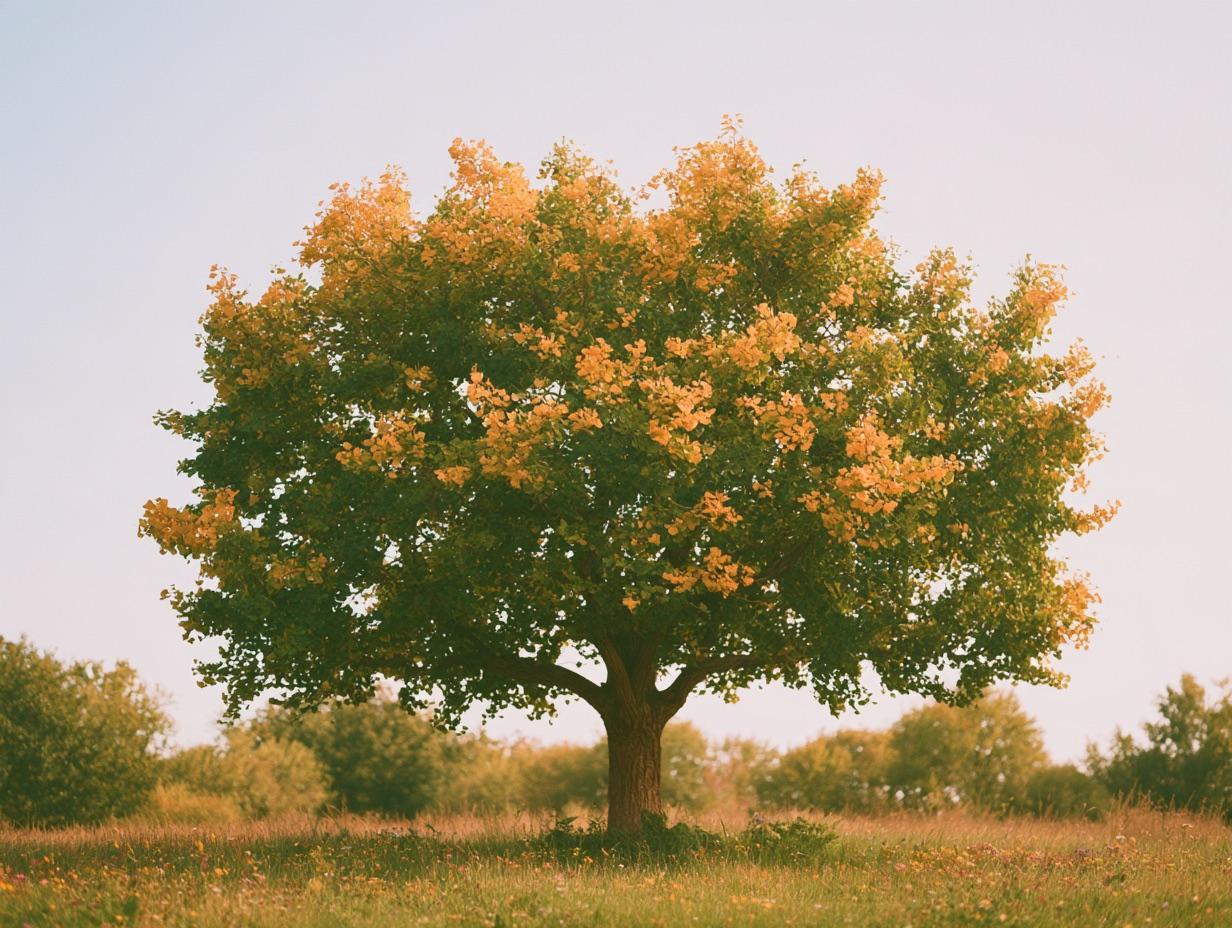
A single ginkgo tree in a meadow, its leaves turning from green to gold
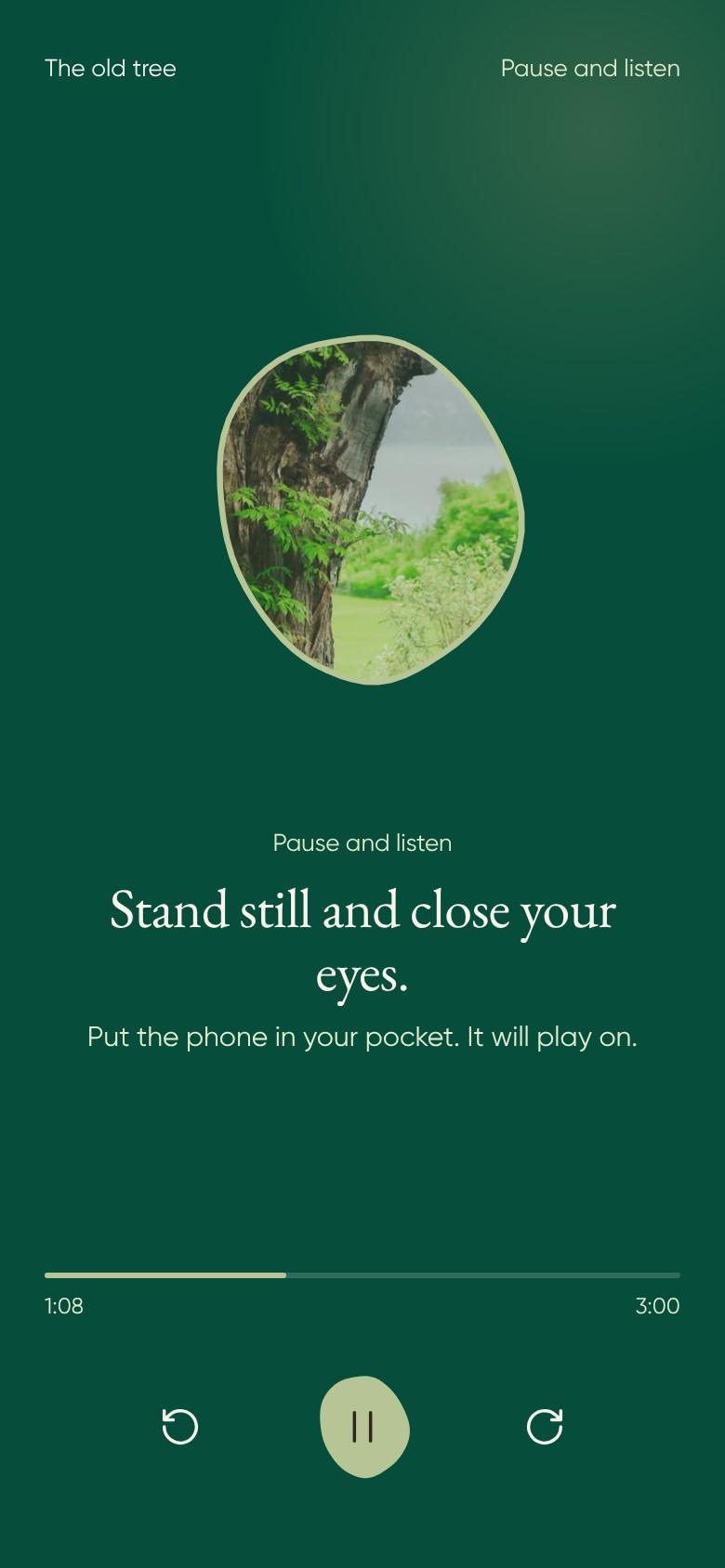
A phone over a meadow: stand still and close your eyes, what can you hear
Today · 6° · clearAt this stop this weekWhy this meadow is not mown in autumnThe seed heads feed small birds through winter, and insects shelter in the stems. It is cut in early spring.Look for todaySmall birds working the seed headsListen2 min · made for today

What they hear fits the season.

The story at a stop changes with the weather, the season and what has been seen nearby. A visitor who comes back in a month hears something new.

An example: the ginkgo at one stop, three visits
  • A green ginkgo leaf, shaped like a small fanSummerGreen leaves shaped like small fans. Find one and trace its veins.
  • A ginkgo tree, its leaves turning from green to goldEarly autumnThe leaves are turning from green to gold.
  • A ginkgo in full gold, its fallen leaves on the grassLate autumnNearly all of the leaves fall in a day or two. Stand under it and look up.
Or they can just stand still for a minute, with a calm voice pointing out what they would have walked past.

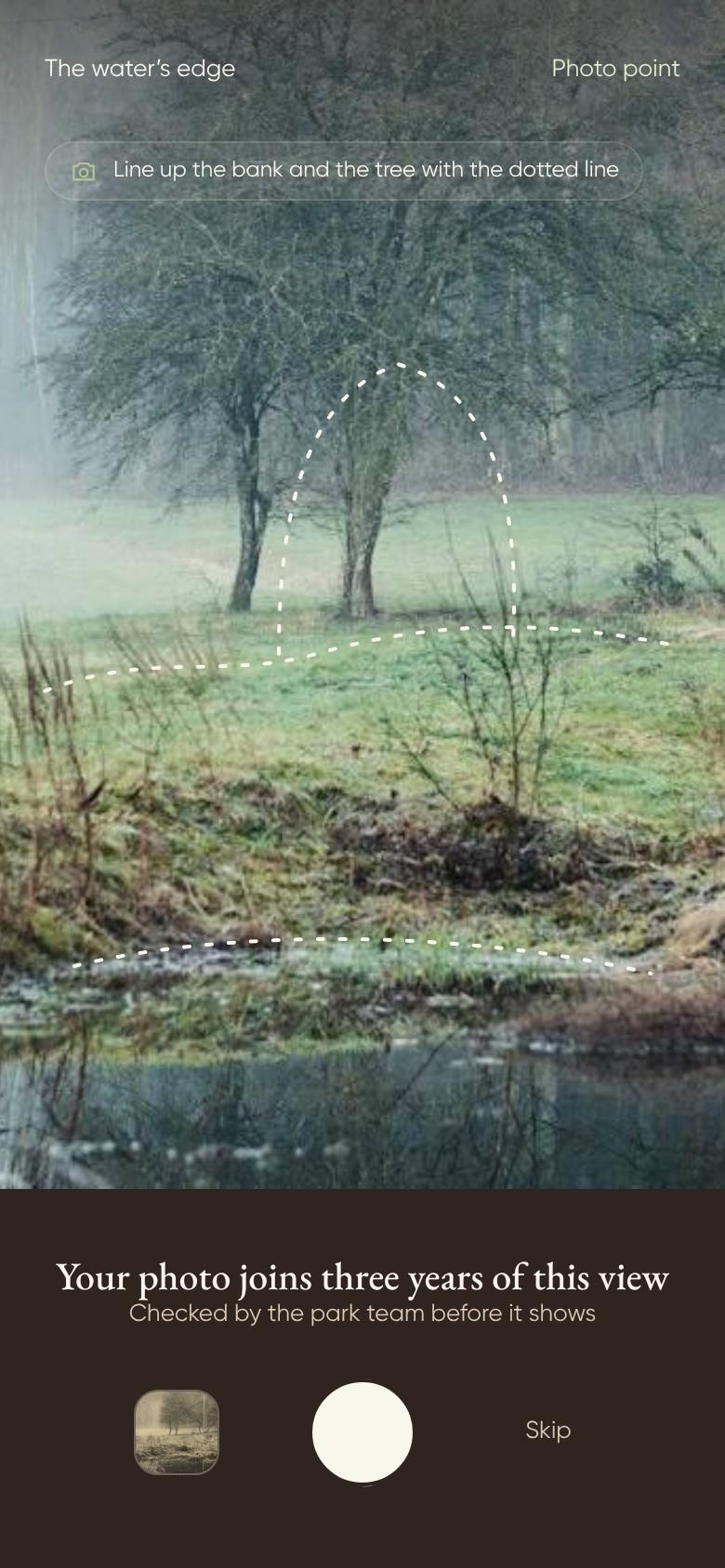
The photo point: the pond through the camera, with a dotted line to match and one button to take the photo
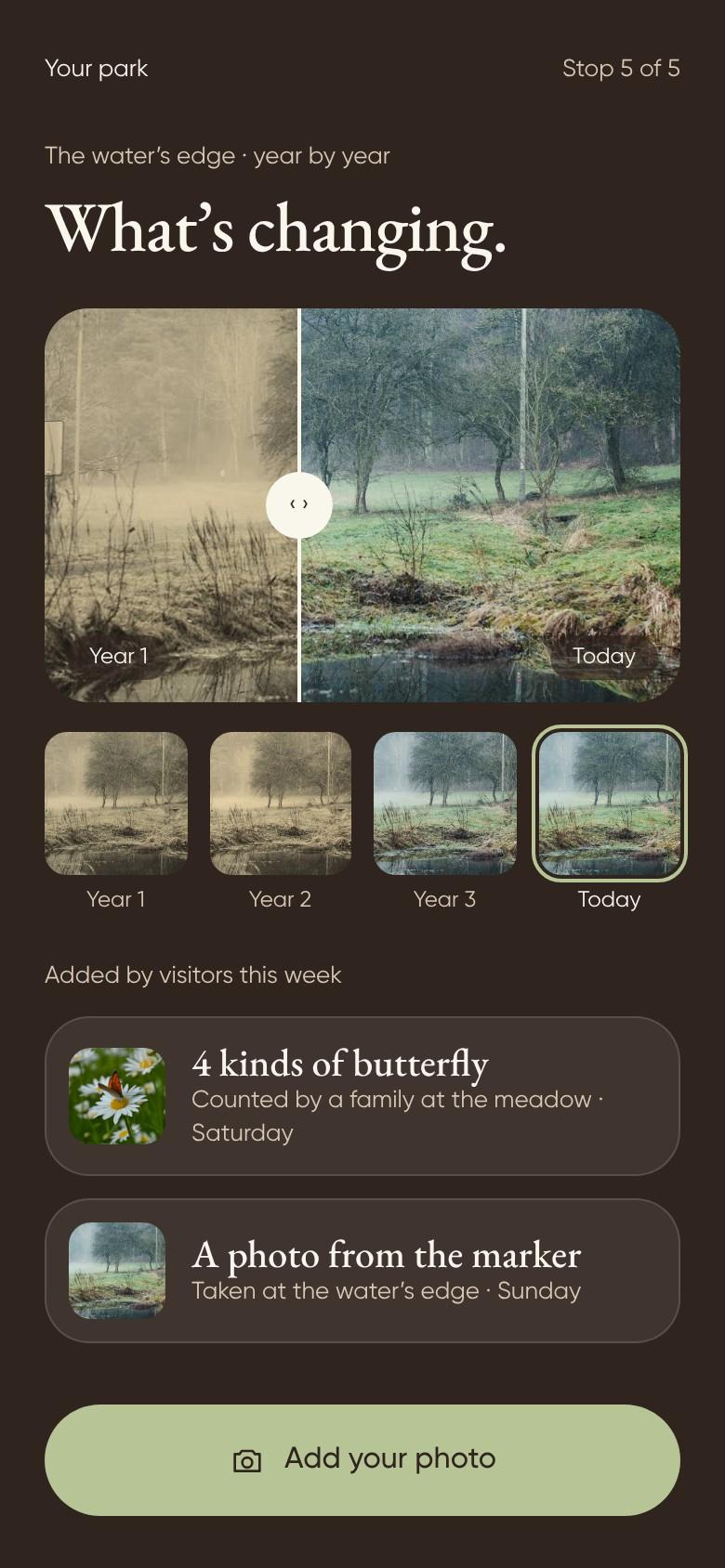
A phone showing year one beside today at the water's edge, with this week's finds from visitors

Every visitor adds to the record of this place.

At a photo point each visitor takes the same view as the people before them. Year after year the photos show a bank recovering or a meadow coming back.

Your team checks each one before it shows. Useful when a funder asks what changed.

An outdoor activity any adult can lead.

Each stop gives a family or a class something to look for together. Here it is butterflies in the meadow.

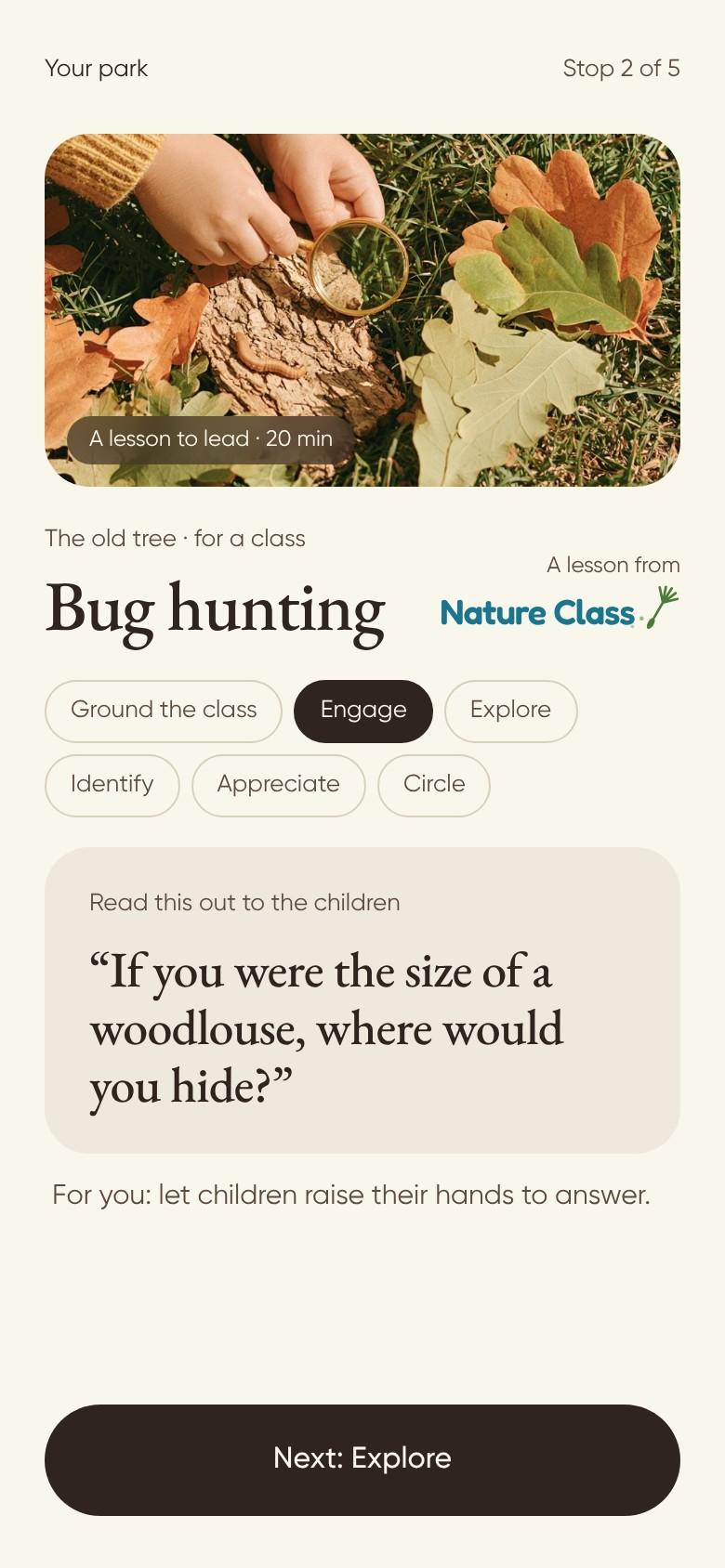
Teachers and parents get a ready outdoor lesson for the same spot, with nothing to prepare.

The lessons come fromnatureclass.education
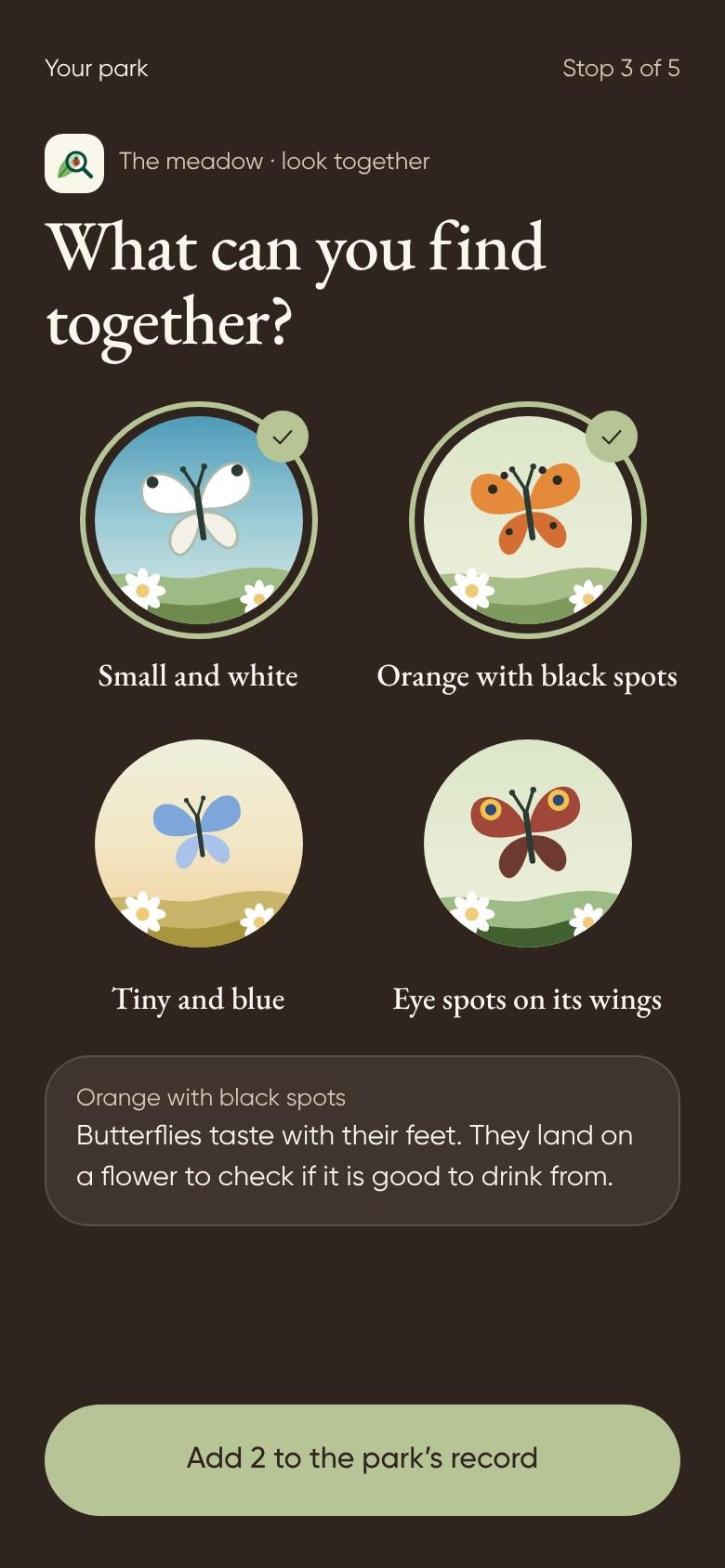
A phone at the meadow stop: what can you find together, with four butterflies to look for
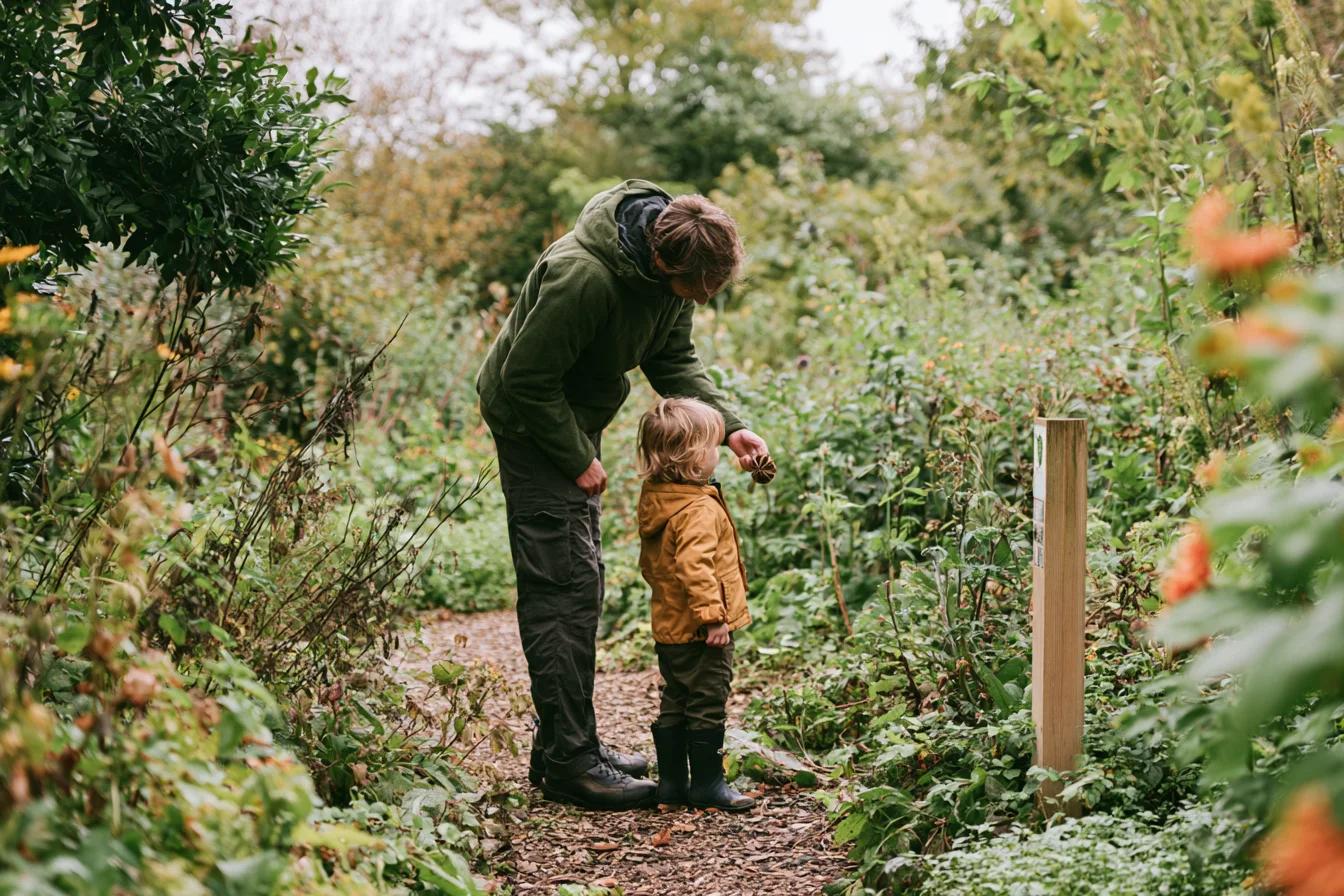
An adult and child looking at a seed pod beside a small trail post in a garden
A phone showing a Nature Class lesson called Bug hunting, with a line for the adult to read out

Two ways to have it. Most places start with the first.

Each one says what you get. You can add the other later.

01Flower entrance
Option 1Signs on your groundsYou get the signs and a web page for every stop. A visitor points their phone camera at a sign and the page for that stop opens. Rewyld hosts the pages and keeps them up to date.
Option 2The trail on your own websiteThe same signs and stops, but the pages are built into your website with your logo and colours. Visitors never leave your site and never see the Rewyld name.

Signs and trails designed and installed by Naturate, the studio behind Rewyld.

Free for public green spacesGet your park listed in the Rewyld appNo signs and nothing to buy. People who use the Rewyld app see your park in it and get a short audio walk there, made for that day's weather. Open to any park, garden or trail the public can visit.
Request a free listing
The path into Buxton secret garden, with pumpkins on log rounds beside sign 01Eight signs in a school garden.Buxton secret garden, east London. From the flower entrance to the pond and log piles, visitors, families and classes all use the same signs. See the garden
Students, staff or patients on your grounds? The same place carries on in the app, between classes or on a break.See wellbeing programs

Which trail or garden do you have in mind?

Send its name. You get back a demo made with your own spots and photos, so your team can try it before deciding.

hi@rewyld.earth