The Trail Was the Prescription
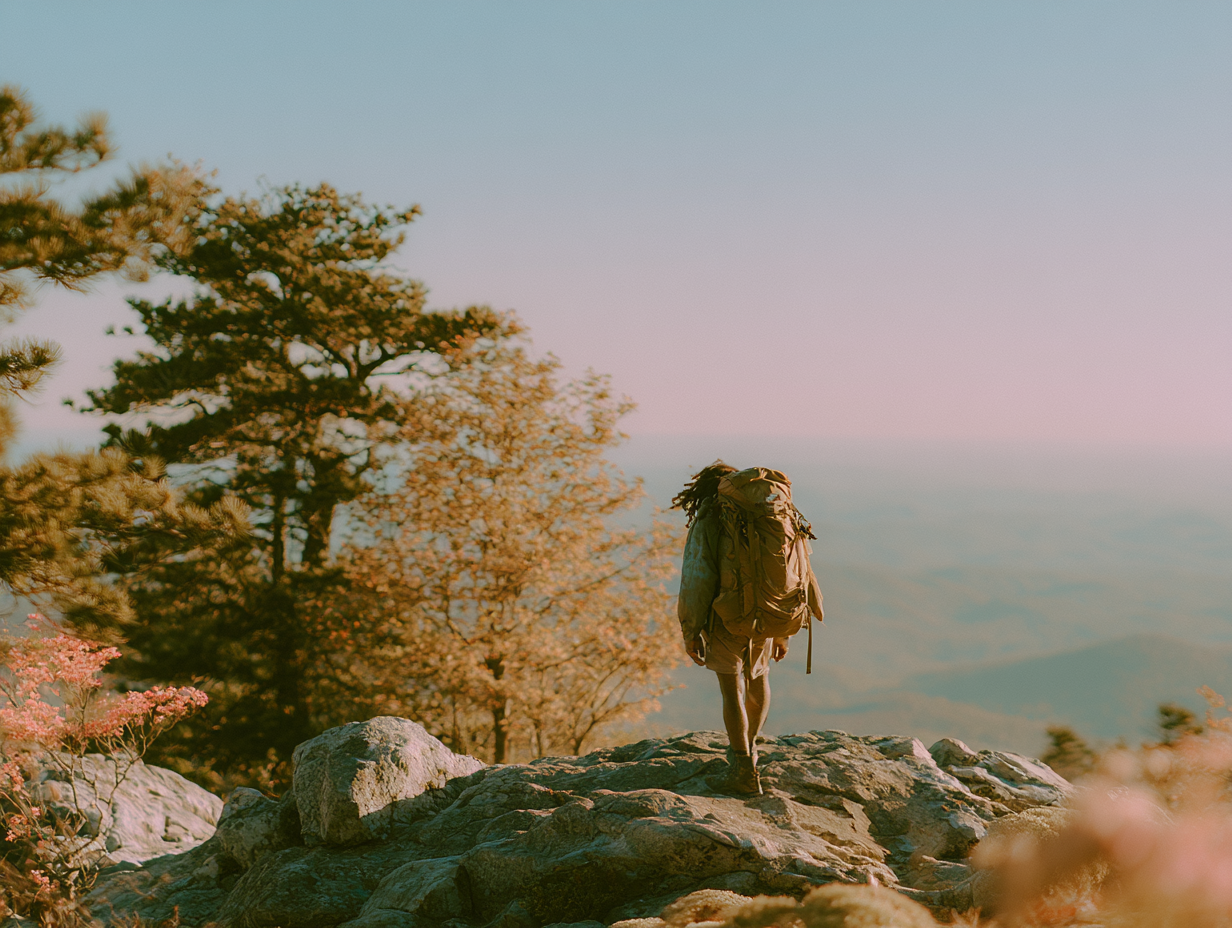
In 1921, Benton MacKaye proposed the Appalachian Trail as an answer to the stampede of modern life: cities, speed, noise, overcrowding, nervous exhaustion. A century later, neuroscience is beginning to measure what he already understood. Time outside does not simply make people feel better. It changes how the mind works. Creative problem-solving improves. Rumination quiets. The brain, given trees, weather, distance, and living complexity, begins to behave differently.
Free mini practice · no account
Try a free guided mindful walk
Pick three, five, or ten minutes. The browser holds the sequence so you can step outside and pay attention to what is around you.
In 1921, a forester and regional planner named Benton MacKaye published a proposal in the Journal of the American Institute of Architects. It described a trail running the length of the Appalachian ridge, not for tourism or the instagram trends, or even for athletic record, but for recuperation. MacKaye wrote about what he called the stampede: the relentless pull of people toward cities, toward noise and speed and overcrowding. The trail was the counter-prescription. A place to go when the nervous pace became too much.
The trail he imagined is now 2,194 miles. Around three million people walk some part of it every year.
What actually happens to the brain of someone who stays out there long enough?
In 2012, a team of researchers led by Ruth Ann Atchley recruited participants on multi-day wilderness trips, four days outdoors without devices or screens, and tested them on the Remote Associates Test, a validated measure of creative problem-solving, before and after. The improvement in their scores after four days: 50 percent. The study ran in PLOS ONE. The sample was small enough to warrant caution about the exact size of the effect, but the direction was consistent and the researchers were specific about what they'd measured: the particular kind of creative recombination that requires the mind to make connections it was too cluttered to notice before.
Three years later, a team at Stanford went looking for what changes inside the brain. Gregory Bratman and his colleagues sent one group of participants on a 90-minute walk through a natural setting near campus and another group along a busy Palo Alto road. Afterward, the nature walkers reported less rumination. The researchers had brain imaging to match: neural activity in the subgenual prefrontal cortex, a region associated with repetitive, self-referential negative thought, was measurably lower after the nature walk. The study ran in Proceedings of the National Academy of Sciences in 2015.
The brain responds to what it is given. Given varied, unpredictable, living stimulation, the kind a trail provides and a screen does not, it begins to behave differently. The things people come back from long walks reporting, a quieter inner voice, a clearer sense of proportion, the feeling of having landed back in something real, are not mystical. They are measurable, replicable, and old. MacKaye described the need for them in 1921. The neuroscience has spent the last decade putting instruments to what he already knew.
A walk done with some attention to what is outside is not the same as a walk done looking at a phone. That gap is what Rewyld was built to help close.
Have a story to share?
We'd love to hear about your journey with nature and mindfulness.
Share Your StoryA walking meditation app for restless minds.
About five minutes of outdoor mindfulness, anywhere.
Find it on