The fall that starts in July
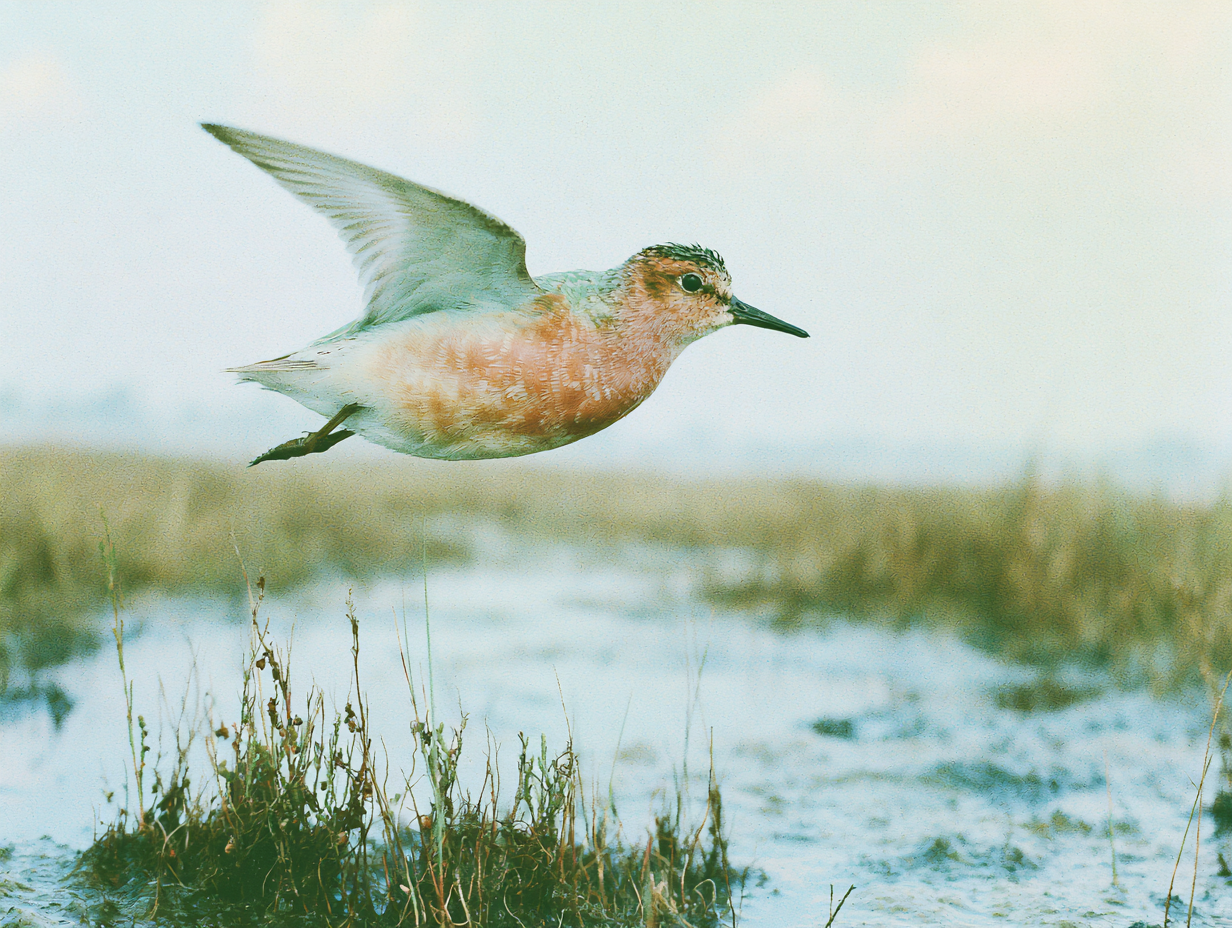
If you asked most people when the fall bird migration begins, they would say September. October at the latest. The shorebirds say July.
Free mini practice · no account
Try a free guided mindful walk
Pick three, five, or ten minutes. The browser holds the sequence so you can step outside and pay attention to what is around you.
Right now, somewhere above the tidal flats of the Atlantic coast, a bird the size of your fist is making its first southward flight.
It hatched in the Arctic tundra four to six weeks ago. Its parents have already left, adult Semipalmated Sandpipers begin their southbound migration from the breeding grounds in late June and early July, before most people have finished thinking about summer. The juveniles follow on their own, without guidance, navigating a journey of thousands of miles they have never made.
The species winters on the coasts of South America. Between here and there, they stop to refuel on tidal mudflats, the estuaries, harbor edges, and salt marshes of the eastern United States. Delaware Bay. The Bay of Fundy. The edge of every coastal marsh that drops below the tide line twice a day and exposes what lives there.
If you asked most people when the fall bird migration begins, they would say September. October at the latest. The shorebirds say July.
This is not a minor technicality or the exception to a general rule. The Semipalmated Sandpiper is one of the most numerous shorebirds in North America, a global population of several million birds, almost all of them now in motion or soon to be. The Least Sandpiper, similar in size and timing, is moving too. By the end of this month, the tidal flats will be busy with birds that most people in the surrounding cities will never know are there, because most people are not looking, and because the trees still look like midsummer and the heat still feels like July.
The living world does not run on the calendar of human seasons.
The Semipalmated Sandpiper was described by ornithologists as early as the 1820s. Its migration timing, early July for adults, July through August for juveniles, has been documented for well over a century. What changes is not the data but whether anyone is outside to notice it.
A tidal flat at low tide in mid-July is not dramatic in the way that September foliage is dramatic or that a snowy owl in winter is dramatic. It requires being there when the tide is low, and being close enough to see the birds probing the mud. The birds are small. They move quickly. They look, from a distance, like the edge of a tide doing something.
But the fact of what they are doing, the first wave of the fall migration, already underway, carrying birds that hatched this spring toward a winter range they have never seen, is not small at all.
The summer is not over. The birds are already going.
Rewyld builds its practices around what is actually outside on a specific day, not a generic outdoors, but what the living world is doing in this week, this season, in your place. In mid-July, one of the things happening is the beginning of the fall. The tidal flats know it. You can go look.
Have a story to share?
We'd love to hear about your journey with nature and mindfulness.
Share Your StoryA walking meditation app for restless minds.
About five minutes of outdoor mindfulness, anywhere.
Find it on