The eye you didn't know you had
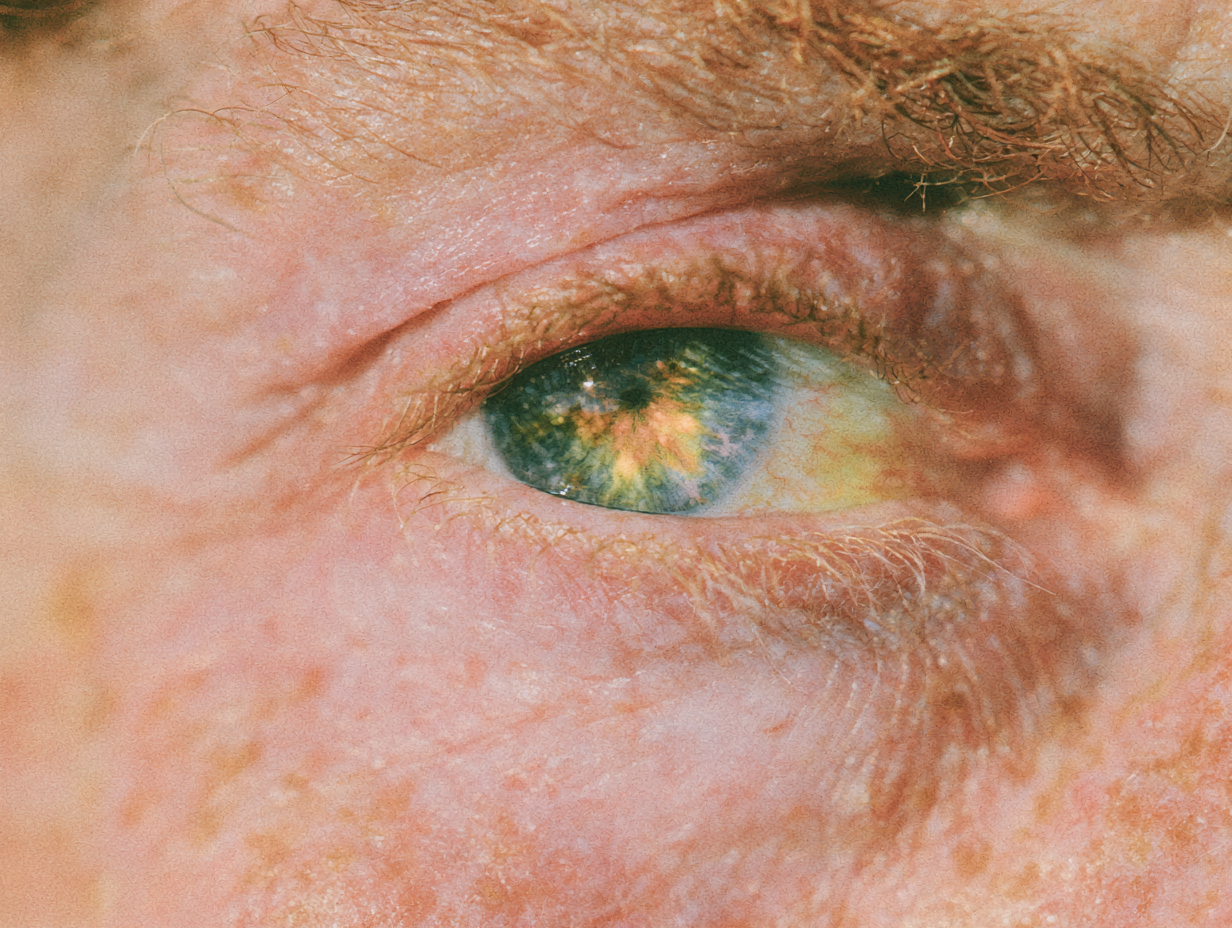
Without adequate morning light exposure, the rhythms governing wakefulness, hunger, and rest start running out of phase with the actual day. The effect accumulates.
Free mini practice · no account
Try a free guided mindful walk
Pick three, five, or ten minutes. The browser holds the sequence so you can step outside and pay attention to what is around you.
The human retina contains two types of light-sensing cells. Everybody learns this.
Rods detect dim light and handle night vision. Cones come in three varieties, responding to different wavelengths, and together they handle color and fine detail in bright conditions. Between them they do everything the eye is supposed to do: form an image, pass it to the visual cortex, let you see.
In 2002, a neuroscientist at Brown University named David Berson discovered a third type.
The cells he found were retinal ganglion cells, a class that had always been understood as signal-carriers, the output layer of the retina, not sensors in their own right. But a subset of them, it turned out, contained a photopigment called melanopsin, and they were responding directly to light without any input from rods or cones. Berson, along with colleagues Felice Dunn and Haiqing Zhao, published the finding in Science that year. They called them intrinsically photosensitive retinal ganglion cells, ipRGCs.
These cells do not contribute to vision. Removing them does not blur your sight or change your ability to see in the dark. What they do is entirely different. Their axons bypass the visual cortex entirely and project instead to the suprachiasmatic nucleus, a small paired structure in the hypothalamus that functions as the body's master clock. The SCN sets the circadian rhythm. It governs the timing of cortisol, melatonin, body temperature, immune function, the entire 24-hour cycle of the body.
The ipRGCs are how the clock receives the morning.
They are tuned to light at around 480 nanometers on the visible spectrum, the blue-green band that the sky delivers most abundantly in the morning hours, before the atmosphere has had time to scatter the shorter wavelengths away. When that light reaches the retina, the ipRGCs fire, the signal travels to the SCN, and the clock sets: morning is here, begin the day.
Researchers at Harvard's Division of Sleep Medicine, led by Charles Czeisler, have spent years documenting what happens when people do not get this signal. The circadian clock drifts. Without adequate morning light exposure, the rhythms governing wakefulness, hunger, and rest start running out of phase with the actual day. The effect accumulates. It does not feel like a missing biological event because we have replaced outdoor mornings with indoor lighting, which is, on average, twenty to fifty times dimmer than outdoor light even on a heavily overcast day. The ipRGC needs a real signal. Artificial indoor light is too faint to reliably set the clock.
The cell does not need you to look at the sky. It is not asking for attention. It fires when outdoor light, at sufficient intensity, which outdoor light almost always provides, reaches the retina. What it needs is the outside. Specifically: the outside, in the morning, before the angle of the sun and the composition of the sky have shifted.
A photoreceptor whose only function is to tell your brain what time it is was unknown to science twenty-three years ago. It was not theorized and then confirmed; it was simply found when someone looked carefully at cells that everyone had assumed were only wires. It had been in every human eye for as long as there have been human eyes. It was built for one signal: the morning.
Rewyld runs practices in the morning and outside because that is when the signal is real. That is what it is actually asking the body to do.
Have a story to share?
We'd love to hear about your journey with nature and mindfulness.
Share Your StoryA walking meditation app for restless minds.
About five minutes of outdoor mindfulness, anywhere.
Find it on