Field Notes: July
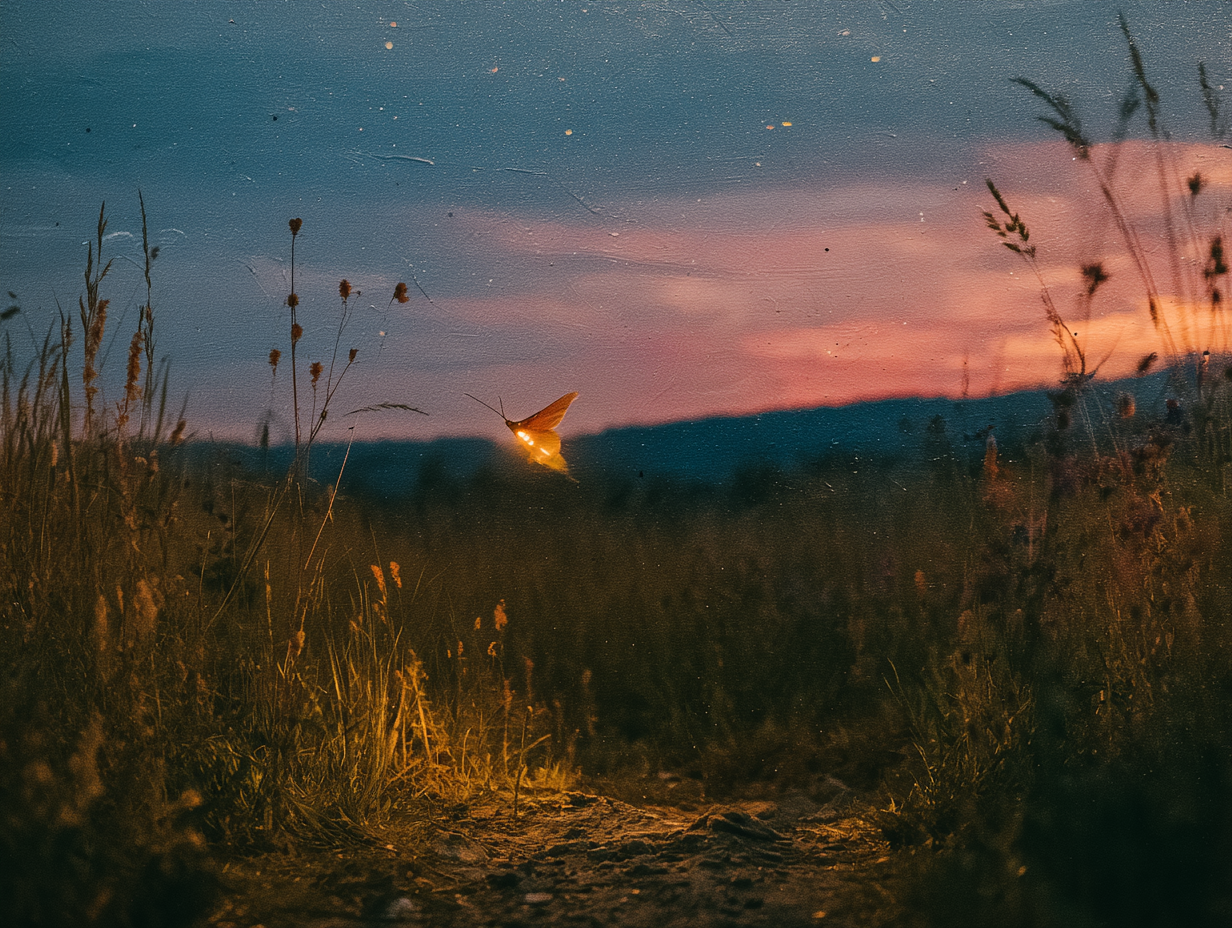
In meadows and along the edges of ponds and streams across the eastern United States, fireflies are now at peak emergence.
Free mini practice · no account
Try a free guided mindful walk
Pick three, five, or ten minutes. The browser holds the sequence so you can step outside and pay attention to what is around you.
June 20 was the longest day of the year. Today, July 1, you have already lost close to ten minutes of it.
By the end of July you will have lost close to forty. The light draws back slowly enough that most people do not notice it happening, a minute here, a minute there, until one evening in August when the sky is dark before dinner and it comes as a surprise. The turn started eleven days ago. The living world noticed before we did.
In meadows and along the edges of ponds and streams across the eastern United States, fireflies are now at peak emergence. The males flash in mid-air: each species with its own specific interval and pattern, a code refined over tens of millions of years of signaling between individuals who never met. The light they make is called cold light. Unlike a bulb or a screen, the luciferin-luciferase reaction that produces it releases almost no heat, nearly all the energy goes to photons. Scientists have spent decades trying to replicate it for human purposes. The firefly arrived at this chemistry long before we started asking questions.
They do not flash during the day. You have to be outside in the dark to see it.
The dawn chorus has shifted. In May, many birds in the eastern US were singing before 4 a.m., because late spring mornings are when sound travels farthest and rivals and mates are listening hardest. Breeding season drives the urgency. By July, most territories are established, most clutches are hatched. The pressure lifts. If you step outside at 5 a.m. now and feel how quiet it is compared to May, you are not imagining it. The silence is biological. The birds know the season has turned.
Dragonflies are at peak emergence across much of North America right now. Their lineage reaches back over 300 million years, they were among the first animals on earth capable of powered flight, and they predate the dinosaurs by tens of millions of years. Their compound eyes cover most of the surface of their heads, giving them close to 360 degrees of vision. In flight, they intercept prey with a success rate of around 95 percent, among the highest documented in any animal. They are eating insects above whatever water is nearest to you, right now, today.
None of this requires going anywhere far. A pond edge, a park, an unmown strip of grass alongside a path. The heat in the first hour after sunrise is a different thing from the heat at noon. The body recognizes this, even when the mind has been indoors long enough to forget.
Rewyld builds its practices around what is actually outside right now, not a generic outdoors, but this week, this season, the living world as it actually is. If it is July, the practice knows that.
Have a story to share?
We'd love to hear about your journey with nature and mindfulness.
Share Your StoryA walking meditation app for restless minds.
About five minutes of outdoor mindfulness, anywhere.
Find it on